Your stories

How Makaton is used in the community at home, at school, at work, and out and about.

Brierley Hill Library
27/09/2024

Brierley Hill Library

Staff at Brierley Hill Library with their Makaton Aware certificate

Embracing Makaton to build an inclusive community

We’re excited to welcome Brierley Hill Library, part of Dudley Libraries, to the Makaton Aware initiative. Powered by GLL, a charitable social enterprise, Brierley Hill Library is committed to offering accessible services, free activities, and a welcoming and inclusive space for all.

Here Senior Library Assistant, Emma Dudley, tells us about how they have embraced Makaton to build an inclusive environment for their community.

“Libraries are important community spaces, and it’s essential that everyone feels welcome.”

At Brierley Hill Library, our mission goes beyond lending books; we aim to improve physical, mental, and social wellbeing across the community. By becoming a Makaton Aware venue, we’re taking another step towards breaking down communication barriers and ensuring that every visitor feels valued and included.

As Senior Library Assistant here at Brierley Hill, my journey with Makaton began during the Covid 19 lockdown. While offering online story sessions, I realised how important it was for everyone to be able to join in, regardless of their communication needs. My manager supported me to undertake Makaton training, and soon, I had completed Makaton signing Levels 1–4 and earned my Makaton Training License for MSFB.

Since then, some of our other staff members have also completed their Makaton Level 1 training, and we've integrated Makaton into our regular activities. From “Storytimes” to "Rattle and Rhyme" sessions, it's wonderful to see everyone participating and enjoying the experience of having a book read to them. We also offer Makaton-friendly class visits, making sure everyone enjoys their time at the library. The benefits we've seen are clear, which is why we've started using Makaton at our outreach events as well.

Becoming Makaton Aware

Not every member of our staff has completed Makaton training, but as a Makaton Aware venue, we are all dedicated to promoting accessibility, inclusion, and meaningful communication. We embrace the key Makaton Aware principles, which are:

  • Embracing Understanding and Patience
  • Allowing Time and Space for Communication
  • Fostering Inclusivity
  • Providing Staff Support
  • Using Clear Signage

We have worked hard to ensure these guiding principles have been incorporated into the way we work as a team. We’ve made sure to display clear signage and symbols around the library, and we’re developing a Makaton map to help guide visitors. Additionally, we’ve created quieter areas with comfortable seating, and we’ve stocked our shelves with books that feature Makaton signs and symbols. We even use Makaton resources in our seasonal displays, like Pride Month and Halloween, to make them more accessible and engaging for everyone.

Positive changes in our community

The response from our visitors has been overwhelmingly positive. Using Makaton has allowed us to host class visits for Special Educational Needs and Disabilities (SEND) groups. We’re also in discussions with SEND coordinators from across the borough about how we can continue to improve our services for these groups.

Our outreach events have been a particular success. It’s been wonderful to see people of all ages using Makaton signs as we lead rhymes and read stories. These sessions are growing in popularity, bringing more people into the library and fostering a real sense of community. The social aspect of our Makaton activities is as important as the communication itself—people are connecting, engaging, and having fun.

Looking ahead

Becoming Makaton Aware is just the beginning of our journey! More of our staff are starting their Makaton training, and we’re excited about the future. Our management team has been incredibly supportive, and together we’re committed to building a more inclusive and accessible space for everyone who visits Brierley Hill Library.

Through Makaton, we’ve learned that communication is not just about words—it’s about connection, understanding, and ensuring everyone has a voice. We’re proud to be part of the Makaton Places initiative and hope to inspire other businesses and community spaces to consider how small changes can make a big difference.

Click here to learn more about Makaton Aware

Published

27th September 2024

Out and about

John Mason International Movers
24/09/2024

John Mason International Movers

Learning Makaton to make moving easier for everyone

We were really excited to hear that John Mason International Movers had taken a significant step towards making their services more inclusive by learning Makaton.

Below, the team at John Mason International Movers shares their experience and the positive impact Makaton has had on their work.

At John Mason International Movers we’ve always believed that moving should be a positive experience for everyone. However, we realised that for some of our customers, especially those with communication difficulties, the process could feel a bit overwhelming. That’s why we decided to learn Makaton.

Our first steps with Makaton

Our journey with Makaton started when we began thinking about how we could better support all of our customers. We knew that moving can be a stressful time, and we wanted to do everything we could to make it easier for those who might find it hard to express their needs. Learning Makaton seemed like a natural step for us.

Our team members, from front-line staff to our dedicated Move Managers, embraced this opportunity with enthusiasm. They recognised that by learning Makaton, they could break down barriers and provide a more personalised service.

The training was both challenging and rewarding. We learned to use simple signs and symbols alongside speech, which helps people who might struggle with verbal communication. It wasn’t just about learning a new skill; it was about understanding and connecting with our customers in a more meaningful way.

What we’ve learned

One of the things that stood out during our training was how much it changed the way we approach our work. For example, when we met a family who used Makaton, we were able to communicate with their child in a way that made them feel comfortable and included. Seeing the relief and happiness on their faces was incredibly rewarding for us.

It’s these small moments that have made us realise the true value of learning Makaton. It’s not just about making our job easier—it’s about making our customers feel at ease during a time that can be quite stressful.

The impact

The impact of our Makaton training has been profound. Not only has it enhanced our ability to communicate with customers who use Makaton, but it has also fostered a greater sense of empathy and awareness among our team. We've received positive feedback from customers who appreciate the effort we've made to accommodate their needs, and our staff feels more confident in their ability to provide inclusive, compassionate service.

Moving forward together

We’re proud of the progress we’ve made, but we know there’s always more to learn. We’re committed to continuing our journey with Makaton and finding new ways to make our services as accessible as possible.

We’ve learned that communication is about much more than just words—it’s about connection, understanding, and making sure everyone feels heard. By sharing our experience, we hope to encourage others in our industry to think about how they can make their own services more inclusive.

Published

24th September 2024

Out and about

Haworth Art Gallery and Museum
24/09/2024

Haworth Art Gallery and Museum

Our journey to inclusivity

We are delighted that Haworth Art Gallery and Museum has recently become Makaton Aware, a brilliant milestone in their commitment to creating an inclusive environment for all their visitors.

Here, Samantha De Simone, Senior Visitor Assistant, tells us about the steps they’ve taken to ensure that everyone, regardless of their communication needs, can fully engage with the museum’s offerings.

I originally come from Italy, where I have family members who often find it challenging to visit museums due to a lack of inclusive provisions. This personal experience fuels my passion for making Haworth Museum accessible to everyone. While many museums claim to be “fully accessible,” this often refers only to physical mobility. However, accessibility encompasses a much broader spectrum, and here at Haworth we are committed to addressing all aspects of it. Thanks to funding from Pennine Lancashire Museums and Schools, we’ve been able to become Makaton Aware and gain access to incredible resources—both digital and physical—that will support our journey towards being a truly inclusive museum.

In 2023, our small visitor team participated in training focused on various aspects of front-of-house operations in a museum. For those unfamiliar, "front of house" refers to any public-facing area within the museum, from the reception and shop to the overall visitor experience. This training was an eye-opener, helping us identify areas for improvement and explore how our team, of fewer than ten staff and volunteers, could make meaningful changes.

We’ve already made significant strides in enhancing accessibility within our museum. We created a family room equipped with sensory baskets and activities, and at reception, we offer bags filled with tools to explore the museum, along with engaging trails. Each exhibition room is furnished with seating, easels, and paper for mindful drawing. Additionally, we’ve signed up for schemes such as the Safe Space Alliance and the Breastfeeding Friendly scheme, ensuring that our museum is a welcoming environment for all.

Our recent focus has been on making sure our museum is accessible to children and young people with Special Educational Needs and Disabilities (SEND), particularly in terms of communication. Among the many communication methods used by SEND families is Makaton, a communication programme that uses speech, signs and symbols to support communication.

To begin our journey with Makaton, we involved our staff in creating short videos for our social media channels, featuring them signing themes related to the museum. We covered various aspects, including our shop, children's activities, weddings, and our family room. This initiative was our way of showing the community our commitment to learning and improving accessibility. The response from the public has been overwhelmingly positive, and our staff have been enthusiastic about getting involved.

Following this, we introduced a Summer Trail for children, featuring double-sided clues—with drawings on one side and Makaton signs on the other. These small steps reflect the dedication of our team and made a significant impact for our visitors.

Looking ahead, we plan to integrate Makaton further into various aspects of the museum, including our school visits, where we hope to offer it as an option for schools.

This transformation won’t happen overnight, but we are committed to empowering our entire team to feel comfortable with Makaton. We will continue to demonstrate our commitment, willingness to learn, and desire to improve our visitors' experiences. The more we learn about accessibility, the more we realize there is still so much to do, but we are wholeheartedly committed to this journey.

Click here to learn more about Makaton Aware

Published

24th September 2024

Out and about

Springboard
23/09/2024

Springboard

About Springboard

Springboard is a caring and committed charity, located in Horsham, West Sussex, and has been supporting families with SEND for over 32 years. We work with children, young people, and families by offering support, inclusive play, and leisure opportunities.

Our Mission

We aim to promote inclusion and diversity, improve physical and emotional wellbeing, increase life skills and independence, reduce isolation by helping to build relationships and friendships, and provide accessible recreational and leisure opportunities.

Makaton Training at Springboard

Throughout the years, Springboard has carried out basic Makaton training, but only a few members of staff were able to access this. It was always on our wish-list to train all staff in Makaton, but we didn’t know where to start! A touch of fate occurred when we were working out the best way to support one of the amazing young people that accesses our services because he uses Makaton. We found out that his mum was a qualified Makaton instructor, and we knew we had to find a way to fund for every staff member to train up to Level 2 Makaton.

Emily is a FANTASTIC trainer; she made learning fun, accessible, easy, and enjoyable, and our charity has improved drastically since. We are now registered as ‘Makaton Aware’, staff are trained up to level 2, we have Makaton signs around our inclusive stay and play centre, staff wear Makaton signs on their work lanyards, and we are constantly thinking of more ways we can include Makaton into our charity.

Future Goals

The next steps are to secure funding for staff to train up to Level 4 and do the Makaton Safeguarding course. We also want to find funding for parent/carers to access the training and continue to spread the word of how fantastic Makaton is.

Click here to learn more about Makaton Aware


Author

Vickie H

23rd September 2024

At work

Morgan's Butchery
04/09/2024

Morgan's Butchery

A butcher at his meat counter holding a Makaton symbols board

A butcher at his meat counter holding a Makaton symbols boardBreaking Down Barriers with Makaton

Morgan's Butchery, a family-run business on the Cambridgeshire, Essex, and Suffolk border, has recently taken steps to ensure that inclusivity is at the heart of their business.

The Nicholas family, who took over the butchery in April 2023, have made it their mission to create a welcoming environment for all customers, regardless of their communication needs. Below, they share their journey and the impact of becoming Makaton Aware on both their business and the local community.

“At Morgan's Butchery, inclusivity has always been a core focus for us. Master Butcher Miles Nicholas, who has multiple disabilities following a stroke, knows firsthand the challenges of living with a communication disability. One of the biggest difficulties he faces is his speech and language disability, which has made even everyday tasks, like ordering a coffee, a stressful experience.

Becoming Makaton Aware

It was clear to us that we wanted to make shopping at Morgan's Butchery a pleasant and accessible experience for everyone. One of the first steps we took was to implement simple yet impactful changes, such as offering braille and large print price lists. These adjustments have already made a huge difference for many of our customers, and becoming Makaton Aware felt like the perfect next step on our journey.

We now have Makaton symbols available throughout the store, and all of our staff are confident at using Makaton signs too. Being Makaton Aware allows us to better serve customers with communication difficulties, helping them feel more comfortable and confident when they shop with us.

Leading by Example

As well as being the director of Morgan's Butchery, I also have extensive experience in supporting children and young adults with disabilities. This has motivated me to drive these changes at Morgan's Butchery, and we are excited to continue building an environment that welcomes and supports all members of our community.

We hope that other larger businesses will follow suit and begin implementing these simple but powerful solutions in their own stores. It doesn’t take much to make a significant impact on the lives of people living with disabilities—small changes can break down big barriers.

By making these adjustments, we hope to inspire other businesses to consider how they can make their services more inclusive. It’s not just about following a trend—it’s about making sure that everyone, regardless of their abilities, feels valued and included.”

Click here to learn more about Makaton Aware

Published

4th September 2024

Out and about

Collar and Cuffs Co
10/06/2024

Collar & Cuffs Co

We're pleased to introduce you to one of the first organisations to become Makaton Aware, Collar & Cuffs Co.

Founded in 2016, Collar & Cuffs Co is a multi-award-winning company renowned for creating sensory trails, tours, theatre, and resources. Their mission? To widen access, participation, and inclusion in heritage, culture, arts, nature, and horticulture for people of all ages with special educational needs and disabilities, including those with severe learning difficulties (SLD) and profound and multiple learning disabilities (PMLD).

Here's what Creative Director, and autistic parent of autistic twins, Julia told us:

“If you've ever been to one of our shows, sensory tours or a sensory storytelling session, then you'll know that we use Makaton every single time, no matter who we're working with.

We use Makaton whether our audience communicates using signs or not. For our youngest participants, signing helps support visual attention and it helps to normalise signing as part of communication. Parents/Carers of children/young people without SEND find signing fascinating. Using it often leads to them wanting to know more, trying out signs for themselves, and having useful conversations with their kids about why signing matters.

For most of our SEND audience, Makaton is a key part of their communication needs, and it's as natural for us to sign as it is to use spoken, sensory, or any other type of inclusive and total communication.

As an autistic person, I have always been someone who uses my hands a lot when I talk, so signing offers me a way to give my hands purpose, control, and meaning. I have also signed with my children since they were born - one of my twins had a 60% hearing loss for nearly four years of his life, and signing became a way to support his language development. Our family still uses Makaton now as a means of communicating when anxiety levels are high, across crowded spaces, or when a bit of discretion is needed.

It is therefore a no-brainer that Collar & Cuffs Co has signed up to become Makaton Aware and will be proudly displaying the Makaton Aware certificate and window sticker.”

Thank you Collar & Cuffs Co for becoming Makaton Aware and helping us to build a community where everyone's voice is heard and understood! Together, we will continue to break down communication barriers and build a more inclusive world for all.

Click here for more information about how you can become Makaton Aware or get in touch on [email protected].

10th June 2024

Out and about

Syeda’s Makaton Story
28/05/2024

A Parent's Path: Syeda’s Makaton Story

Syeda with her family

Syeda with her parentsOur beautiful daughter Syeda was born in 2016. As she grew and developed, we realised that she was missing certain milestones and after repeated trips to the doctors, nothing serious was identified as the cause.

Then at 11 months, she suffered a fit whilst struggling with a cold and flu. What happened next would change our lives forever. What little progress she had made regressed, and we were told she had Global Developmental Delay and suffered Febrile Seizures. After seeing a Neurological Paediatrician, we finally got a diagnosis of Spastic Cerebral Palsy, Epilepsy, and Global Developmental Delay.

Speech was one aspect where we really struggled as a family. We were told she may never talk and that we should prepare for that scenario. We moved back to the UK and set up lots of private appointments with different hospitals.

It wasn’t until Syeda was 3 1/2 years old that we were told about Makaton by our amazing Early Year Support Worker, Mel (Sandwell Council). She set us up for a taster session for parents with additional needs children. Despite Syeda being so young, we used Makaton and it only made a slight impact. I was worried and reluctant to continue this journey as I thought it might be an impediment to her speech. After being convinced by my husband, we both decided to give this journey everything we could. We both enrolled privately onto Level 1 and Level 2 Makaton courses. We began using it at home with each other and with Syeda as much as we could. It was through a lot of repetition and perseverance that Syeda started to say words and communicate her needs. It was an amazing achievement, and Makaton has become a part of our everyday life.

It was a fabulous feeling seeing the positive impact this had on Syeda finally being able to communicate her basic needs. My husband and I decided to continue and both completed Level 3 and Level 4. We found that a lot of behaviours that had once been present reduced significantly. Her ability to communicate what activities she wanted to do, when she wanted to use the washroom, what she wanted to eat, etc., increased. It had meant her overall life quality was improved. Her personality grew and her ability to socialise with greater confidence also improved.

Despite her newfound ability to now communicate her needs, it was still frustrating when we were out and about in social situations where she wanted to interact with others around her. As they were unable to communicate with her despite being willing to do so. People would ask us signs when they wanted to include and talk to Syeda, it ranged from people in the healthcare professions to general members of the public to friends and family. As a result, we realised quickly we had to make the environment around Syeda Makaton aware and improve the skills of all willing individuals to increase her comfort at all levels of interaction in the wider society outside the home. We knew we had to teach Makaton to make the change.

Following this, I decided to do the Makaton Tutor Course to facilitate Syeda. Her use of Makaton is a lifetime journey and the impact it has had is unparalleled. As a family, it has helped us all communicate and meant Syeda is now included in every aspect of our lives.

I will always be grateful to Mel for introducing us to Makaton and also to my husband for convincing me to persevere on this journey.

Author

Sarwat

28th May 2024

At home

Taylor’s Terrific New Resource!
18/04/2024

Taylor's Terrific New Resource!

Taylor sitting downWe are thrilled to share an exciting addition to the Makaton Library, all thanks to Taylor, a passionate Makaton User. 

Taylor approached us with a brilliant idea: creating Wheelchair Access Posters featuring Makaton symbols. Now, we are delighted to share that these essential resources are readily available for everyone to access!

Taylor told us: “I was exploring the Makaton website and I realised there weren’t many resources for wheelchair users, so I decided to create some. 

I had an idea and the charity’s Resource Team made them a reality. 

I have personal experience of needing space for my wheelchair which I use all of the time. Sometimes if there is no clear parking sign to say that the space needs to be big enough, I haven't been able to get out of my car because others have parked too close. I am excited this resource will help people to think more about the amount of space they leave. 

I designed these posters to raise awareness in the Makaton community of the needs of wheelchair users.”
 
Thank you Taylor for working with us to create this fantastic resource! 

You can find the four versions of Taylor’s Wheelchair Access poster on the Makaton Library by searching for ‘Wheelchair Access”. 

  • Please remember to leave space for electric wheelchair access
  • Please remember to leave 2 metres for electric wheelchair access
  • Please remember to leave space for manual wheelchair access
  • Please remember to leave 2 metres for manual wheelchair access


wheelchair access poster

Author

Taylor

18 April 2024


Out and about

Empowering communication in Early Years
19/01/2024

Empowering communication in Early Years

Noticeboard with Makaton signs

Noticeboard with Makaton signsJayde Conway is a newly qualified Makaton Tutor and Early Years SENCo (Special Educational Needs Coordinator) at The Sunflower Children’s Centre in Tameside. Here, she shares her journey to becoming a Makaton Tutor and the positive impact Makaton is making in her Early Years setting.

In the vibrant world of early childhood education, effective communication is the cornerstone of fostering meaningful connections with young learners. As an enthusiastic advocate for inclusive teaching practices, I embarked on a transformative journey to become a Makaton tutor. This decision was fuelled by the desire to create an environment where every child, regardless of their communication abilities, feels heard and understood.

Children entering a nursery setting come along with a diverse range of communication abilities. Some may be confident communicators, while others may face challenges in expressing themselves. Recognising this diversity, I decided to explore Makaton, a unique and inclusive communication tool.

My journey as a Makaton Tutor began with a comprehensive training programme that covered the fundamentals of the Makaton communication programme. From basic signs and symbols to constructing sentences, my Tutor training provided a thorough understanding of how Makaton can be integrated into everyday life. One of the highlights of the training was the emphasis on practical application. Through hands-on activities and scenarios, I gained confidence in incorporating Makaton seamlessly into nursery routines, learning, and play.

The primary benefit of integrating Makaton into the nursery setting is the enhanced communication between educators and children. For those who may struggle with verbal communication, Makaton provides a visual and tactile means to express their thoughts, needs, and feelings. Makaton fosters inclusivity by breaking down communication barriers. It creates a shared understanding that unites children of diverse communication abilities, promoting a sense of belonging among the nursery community.

Beyond communication, Makaton supports the development of essential skills such as fine motor skills, cognitive abilities, and social interaction. Engaging with signs and symbols stimulates various areas of a child's brain, contributing to their overall development.

Picture of JaydeAs we continue to implement Makaton across our early years setting, I am seeing a positive ripple effect as staff and children develop their communication skills and engagement with Makaton. We have introduced a 'Sign of the Week' board, which has been a great way to support staff and children in learning a brand new sign every single week. Children are more engaged, confident, and expressive in their communication. The nursery environment is a space where every child's unique voice is valued and heard.

Becoming a Makaton Tutor not only enriches my teaching practice but also contributes to the development of an inclusive and empowering nursery environment. By embracing the power of Makaton as a team, we are helping children overcome communication barriers and laying the foundation for a future where every child has the tools they need to thrive. In the colourful world of early childhood education, Makaton is a beacon of inclusivity, ensuring that no voice goes unheard, and I am both excited and proud to finally become part of the Makaton family.

Author

Jayde Conway

19th January 2024

At school

Volunteer playworker
07/12/2023

Volunteer playworker

Portrait photo of Abigail

Portrait photo of AbigailMy name is Abigail, and my story was featured on The Makaton Charity website back on 10th May 2022. I thought I would give an update for your website to show you where I am: a proud volunteer playworker working for the incredible Darlington Association on Disability (D.A.D).

We work with children and young people aged 3 to 25 with complex needs to other special needs, especially young people and children with communication and speech impairments.

We work very closely with Makaton; we are all training and learning at the same time, and we understand a lot of children's and young people's needs. As a volunteer playworker, this brings my Makaton skills to the test, and it has come in handy when you're at work, loving every minute of being a Volunteer Playworker.

A young woman chopping a tomatoAlso, we do various schemes through D.A.D, and we also love to learn and practice our Makaton skills.

I can't wait to see what the future brings for all at Darlington Association on Disability.

Thank you so much for sharing my volunteer playworker story on your website. Maybe a part three in the future. Thank you so much for listening to my story.

Love, Volunteer Playworker Abigail xxx


Read Abigail's first blog: Makaton is for everyone

Author
Abigail
7th December 2023

At work

Olaf Learns Makaton
20/11/2023

Olaf Learns Makaton

Team Olaf to the Rescue front cover

Olaf is a three-year-old fox red Labrador therapist and a published author. He was invited to speak at the Cheltenham Literature Festival 2023. Olaf is a family pet registered with the Pets As Therapy (PAT) Charity. His job is to make people smile when, with his human mum (a specialist teacher and mindfulness coach), he visits hospitals and schools.

Every Thursday morning, Olaf goes to Battledown Special School. He enjoys his visits so much that he set his second book there! Team Olaf to the Rescue is a heartwarming story about his classroom adventures (it very cleverly rhymes!). With help from his merry band of canine mates, Olaf saves the school’s Christmas celebrations and gives the children a party they will never forget. All the dogs in Team Olaf are Olaf's real friends whom he sees every day on his walks. They all play a vital role in the story, showing kindness, creativity, and bravery. Fun activities are added to stimulate the reader's imagination and memory.

Olaf in book shop Battledown School uses Makaton as part of their teaching and learning, so we included their symbols in the book to enable more of Olaf’s human friends to enjoy it. We were delighted Makaton wanted to be involved in our project and are grateful to the Team for their expertise and patience. They provided symbols for the concepts/story words and explained where to place them on the page, so that the story makes sense to the Makaton reader.

Olaf's first book, Mr. Olaf the Therapist, is a mindfulness scrapbook, diarying his experiences in a mainstream school and his work in the NHS. As a PAT dog, Olaf visits Cheltenham General Hospital where he is a valued member of the Knightsbridge (Gastric) and Critical Care Teams. He has been doing this for over two years but is still banned from the staff rooms because of the doughnuts... It is a privilege and humbling to be welcomed so warmly by patients, their families, and Olaf’s NHS colleagues. Olaf also shares his lifestyle wisdom with self-care activities and mindfulness questions to help us reflect on our own work/life balance.

Olaf gives all the proceeds from his books to the Pets as Therapy charity. He attends promotional PAT events e.g., Crufts and Goodwuff.

For more information about PAT and/or to buy Olaf’s books, please visit Pets as Therapy.

Rachel and Olaf Flower

Author

Rachel and Olaf Flower

20th November 2023


Out and about

Ava's Communication Journey
17/11/2023

Ava's Communication Journey

Ava with her mum and dad

Ava, with her Mother and FatherOur daughter Ava was born with left sided CDH (Congenital Diaphragmatic Hernia) which was undiagnosed until birth. She had this repaired at just 4 days old and spent her first 5 weeks of life in neonatal intensive care and subsequently has a delay in her development, resulting in Ava reaching her milestones much later. Talking is one of those milestones she hasn’t quite reached yet at 4 years old.

Ava’s understanding of what we were saying to her was always there but as she couldn’t say what she wanted to back to us, it was so disheartening as she’s such a happy, smiley little girl, who is cheeky and full of life.

Before starting nursery, Ava would make sounds but would often become very frustrated, very quickly at not being able to communicate successfully with us. Her frustration would mean she would grab and pull us to get our attention or for something she wanted. She would also pinch and push other children on play dates, which was really hard to deal with. It often made me feel very anxious at the thought of having to constantly watch her and be ready to pull her away if she got too ‘handsy’. At times, it felt easier just to say we couldn’t make a play date, just to avoid being in what I felt was an uncomfortable situation.

When Ava started going to nursery in the months before turning 3, she had the 1:1 support from Sarah who is also a Makaton tutor. Sarah would explain the use of Makaton to us but initially we felt that Ava may not be ready to learn and follow a new skill like that, as her attention span was so minimal and she would never hold her attention to any one thing, for more than a matter of seconds. We also thought that it would somehow stop her from speaking.

Ava using Makaton symbols

We noticed as Ava spent more time with Sarah in nursery setting that she would start to use hand gestures at home or physically move us to what she wanted to do or to get something that she needed.

When we would pick Ava up from nursery, Sarah would say what sign(s) they’d been learning that day and we would see that Ava would then start repeating those signs at home. The first signs Ava made were amazing and it felt quite emotional because Ava had a huge beaming smile on her face and you could see her happy, that at last, she could sign something that we understood. She could finally communicate effectively with me and her dad and the more she did, the calmer she seemed to become. It was at this point we felt that it was time we looked at completing Makaton level 1 to gather a better understanding and to be able to use it properly to make a difference to Ava’s communication.

We talked about Makaton with our family and we had a positive reaction, although the grandparents were more apprehensive about trying to learn a new skill and retaining the information. They were also nervous about having to practice the signs in a group setting (even though we are all family and know each other!) and feeling embarrassed if they couldn’t do the sign properly. But the main thing was all the family wanted to come together and do it for Ava as everyone could see it’s the one thing that seemed to be working for her communication.

Ava reading a book

We did level 1 Makaton over two sessions which worked really well. Once we got into the sessions, everyone settled in and felt so comfortable with Sarah’s teaching, we had a laugh whilst learning and everyone felt happy they’d given it a go and actually learnt some!

Since completing level 1 and incorporating Makaton into our daily lives, Ava’s so happy and the frustration has disappeared!

Now, Ava can sign what she needs; food she wants to eat, whether she needs a drink, what she’d like to watch on tv, what she wants to play with, where she wants to go; the list seems endless now, whereas before we’d struggle to know any of that. She can go and play at grandparents and they understand what she wants now, they also have grown with confidence in using Makaton and have even carried on watching extra Makaton videos to help.

Ava has settled very well into nursery and is thriving. Nursery and the early years staff at the setting have also completed Makaton level 1 and 2, which has been amazing. Ava uses Makaton naturally and is saying the words alongside signing, with many more new words coming, whilst developing new sounds. She tries so hard to repeat a word you say to her and her confidence in talking is growing so much, she is very vocal and jabbers away in her own language a lot now, practicing sounds! It’s so lovely to hear and we’re so happy for her that she finally feels understood. We also feel very proud of her for all the progress she’s made. The future for her communicating doesn’t seem quite so daunting, we’re excited!

Written by Natalie –
Mum of the gorgeous Ava 😊

Author

Natalie

17th November 2023

At home

Makaton in Adult Care
24/08/2023

Makaton in Adult Care

Amy signing at laptop“I wanted to give the adults we support the voice they had lost”

Amy is a Learning Partner at Alternative Futures Group (AFG), one of the largest not-for-profit Health and Social Care charities in the North West. AFG provides person-centred support to people with a range of learning disabilities and mental health conditions.

“Makaton first came on my radar in my previous role at AFG as a Support Worker, when I was told one of the people I supported used it to communicate. I familiarised myself by looking through their support plan and Makaton communication books, but without formal training I had no idea if I was getting it right or not.

I found it really difficult to not be able to communicate with the person I was there to support in the way that they needed.

I later moved into a new role in the Learning and Development team at AFG, where I am responsible for delivering training to our Support Workers and other operational colleagues.

I was still interested in Makaton, so I signed up to a taster session in Chester. I was so inspired by the session that I knew I wanted to become a Tutor myself and bring these skills to my role at AFG. I immediately booked onto my Level 1 and 2 courses, which I completed while also working full time.

What struck me most during these courses was that I was often the only person there from an adult focused background. I knew from my experience how difficult it could be for young people who had learnt to use Makaton as their main method of communication, to then come into an adult care setting where they were not understood and effectively had no voice. I wanted to give the adults we support the voice they had lost - it is a basic need.

I completed my level three Makaton training whist 37 weeks pregnant and my level four with an 8-week-old baby! I was determined.

AFG have been incredibly supportive and allowed me to study for my exams during work time. As an organisation, AFG recognise the positive impact of having support staff upskilled in areas such as Makaton.

I officially qualified as a Tutor in July 2023, and I loved absolutely every second of it.

I am proud to be the charity’s first licensed Makaton Tutor and I am now planning to introduce a ‘Communication Club’ to share learning, resources, and ideas on how to implement Makaton with colleagues who support people who use the language, or have specific communication needs.

I would ultimately love to help AFG to achieve Makaton Friendly status so that we can use it to enhance more people’s lives.”

Click here to find Makaton Training 

 
Author
Amy
23rd August 2023

At work

Ella’s Makaton Journey
03/07/2023

Ella’s Makaton Journey

Ella signing 'Love'Ella is currently completing her fourth year of Norland training as a Newly Qualified Nanny in North Somerset near Bristol before she earns her professional Norland Nanny status.

My Makaton journey began in 2016, when I worked as a buddy through North Somerset Council providing care for children and young people with additional needs aged 4-16– many of whom used Makaton to communicate. It was then that I was able to witness how truly special Makaton is. Children in my care were able to express themselves independently, which meant that their frustration was eased, and preferences could be communicated. This was such an incredible moment to witness and I knew, there and then, that it was something I wanted to understand and become involved in.

Throughout my Norland training, I continued to develop my newfound passion by completing a Level 1 Makaton course, which I loved!

As a way of utilising the signs I had learnt on my Level 1 course, I began to sign songs and stories to aid my development. I also used Makaton whilst I nannied. It was so lovely to see that the early exposure to signing, in conjunction with speech, led the little people in my care to develop enhanced verbal skills, something I felt honoured to help with! As my confidence grew, I wanted to share this passion. I taught and signed a poem to students from my cohort (known as a set) at Norland, and together we performed to University of Seitoku students who were visiting Norland on a study trip from Japan.

Makaton quickly became one of the most enjoyable and rewarding skills that I have learnt. I started an Instagram account called @nannyellalynne, as a platform where I could share my love of Makaton and connect with others who felt this way.

When the Covid 19 pandemic hit, I produced daily sign videos showing what I had learnt, hoping to inspire others and revise my knowledge.

Knowing and using Makaton has impacted my daily life hugely. I feel proud that, by continuing my development, I have been able to create an open line of communication between myself and all groups of people who I encounter in my life. This is something I feel incredibly proud of.

In my line of work as a nanny, I can now use Makaton with the little people in my care to support them to develop their communication, language, and literacy skills. Signing while speaking has been shown to encourage the development of communication and language skills and, as a caregiver, gives me a greater understanding of the wants and needs of the babies and children in my care, which can help to reduce frustration.

Most recently, I have completed my Level 2 Makaton training, which I have really enjoyed. I cannot wait to complete Levels 3 and 4.

Makaton sign communication is so beautiful and creative and should be recognized for its true potential. For many people signing is their superpower and I, for one, hope more people will engage with this beautiful language and learn a new mode of communication.

Let’s continue to change the world one sign at a time!

Would you like to start or continue your Makaton journey? Click here to find training 

Author

Ella K

3rd July 2023

At work

Dunholme Pre-School
03/07/2023

Dunholme Pre-School

Makaton Friendly CertificateAs the school year draws to a close, let's explore the inspiring story of Dunholme Pre-School, a mainstream primary school in Lincolnshire. 

Their Makaton journey began with a single student, suggested to engage with Makaton to support speech development. The staff's open-minded adoption of Makaton and the ensuing positive change not only transformed their teaching approach but also strengthened their commitment to inclusive education.

In the early stages the staff and students began experimenting with Makaton, and they were instantly able to identify its vast benefits. The positive effects on communication and comprehension led to a unanimous decision: Makaton training for all. Embracing this challenge, the staff has since then incorporated Makaton in their everyday interactions, skillfully utilising signs and symbols within the educational environment.

The Makaton 'Sign of the Week'

This is a particularly popular initiative among the students. Each week, different classes or pupil groups showcase the selected sign, increasing awareness and promoting regular use. Involving students in such participative learning methods has helped cement Makaton as an essential communication tool within the school.

"Makaton is more welcoming to non-verbal children as some of the signs are quite self-explanatory and it makes them feel able to communicate, if they can’t or do not wish to speak" - Gayle Smith, Manager of Dunholme Pre-school

This summer, we celebrate the determination and success of schools like Dunholme Pre-School, who lead by example, making education accessible and engaging for every child.

Click here to find out more about how to become Makaton Friendly 

Author

Dunholme Pre-School

3rd July 2023

At school

Rui’s Makaton Story
21/04/2023

Rui’s Makaton Story

Kaley, Rui, and Nick

KaleyIn honour of Neurodiversity celebration week, I wanted to share with you why this following quote from Ignacio Estrada really resonates with me:

“If a child can’t learn the way we teach, maybe we should teach the way they learn.”

When my son, Rui, was one years old, he was diagnosed with Global Developmental Delay (GDD). GDD is an early onset chronic neurological condition. It’s an umbrella term used when children are significantly delayed in multiple areas of development such as motor skills, speech, cognitive and social and emotional development.

Rui was delayed, and still is in some areas, reaching his developmental milestones. He crawled at 22 months, walked at 26 months, and was able to jump recently at the age of four, but is still preverbal, not having spoken a single word yet or consistently made any symbolic sounds.

When Rui was two, my husband, Nick, and I had some advice to try using Makaton. Makaton is a communication tool which uses signs and symbols that supports the development of essential communication skills such as attention and listening, comprehension, memory, recall and organisation of language and expression. When using Makaton, you always speak while you sign or use symbols to make the link between the sign/symbol and the spoken word.

Putting myself in Rui’s shoes; every day he can’t say how he is feeling, tell me if he’s hungry, if he’s in pain, or if he wants to play. I could also see that other children didn’t want to play with him at times. What did they get out of playing with Rui who didn’t understand their games or was not able to speak back to them. It would break my heart and as his Mom I needed to try everything I could to get him heard, be understood, and feel included. I’d already picked some Makaton up from the CBeebies TV programme ‘Something Special’ and enjoyed learning it from that, but now I had a real reason to implement it at home. We hoped it would hopefully reduce Rui’s frustrations and regular meltdowns while we wait for the speech to come.

Learning Makaton
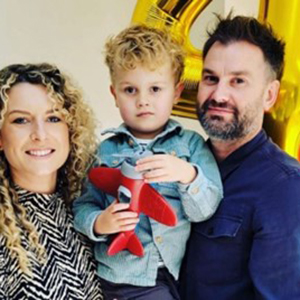
Kaley, Ryi, and NickTo start with, learning Makaton was a daunting task. I put a lot of pressure on us as parents to get it right. I wanted to learn all the signs in a short space of time, but Rui was so little and unsurprisingly not interested in taking note of what I was trying to teach him yet, so then it began to feel like an impossible task and at times, a waste of time.

Keen to stick with it, we took some of the pressure off and focused on five key functional Makaton signs, and consistently used them for a year. It wasn’t until Rui was three, he began to show an interest in watching my hands and then one day he just signed ‘milk’ back to me. It was amazing! This was my preverbal child telling me something that he wanted without crying or pointing for the very first time. I was elated. He’d worked out he can ask for something and someone understands what he is communicating. He is being heard! Soon after ‘milk’, he learnt to sign ‘more’ and then ‘snack’. We were making progress.

With Rui now showing some interest in Makaton, Nick and I, along with Nanny and Grandad, as well as Rui’s key workers at nursery, signed up to complete a Level 1 and Level 2 Makaton course. It was Tuesday nights for the next 10 weeks, but it would be so important for us as a family and potentially Rui’s future. Empowered with the learnings from the course, we gradually implemented more Makaton signs into our day-to-day activities with Rui, and his Makaton vocabulary has been growing ever since. Around Rui’s 4th birthday, five months ago, Rui signed ‘Mommy’ for the first time. Having never heard him say Mommy, something that I use to long for, it really melted my heart. I love that Makaton has provided us a means to communicate with Rui. It’s helped Rui understand routines, feel understood and ultimately helped him feel included. His temperament has really changed over the last year too. He is much calmer (he can still get upset and we have the very occasional meltdown) but he has shown huge developments in his intellectual understanding. It has really blown us away.

Rui is such a happy, playful, and cheeky boy. He can now use Makaton to play games, and joke around with us. His speech development is always going to be a slow journey, but he’s recently made some symbolic sounds and is attempting new sounds with his mouth, which is progress. He is now also having speech and language therapy.

Because Makaton has brought so much joy into our family life, earlier this year, Nick and I started an Instagram account called ‘Parents_Who_Makaton’ (@parents_who_makaton), so we can share what we’ve learnt with easy to digest, bitesize video clips. If we can help even just one family experiencing a similar situation it would just be so wonderful.

We sadly don’t live in a world where everyone knows Makaton, but it’s great to raise awareness (something I’m very passionate about) and to share stories of other ways some children and adults need to communicate. I still hope Rui will be able to speak one day for his own overall development and wellbeing, but the thought of him never finding his spoken voice doesn’t worry me as much anymore, because I know there there are more and more people and businesses out there willing to be more inclusive, trying to make positive change, and see learning difficulties as learning differences.

So how I relate to the Ignacio Estrada quote is that my child can’t speak the way we speak, so let’s communicate another way. And we do!

Author

Kaley Gent

Operations and Delivery Manager

21st April 2023

At home

Essential Early Years
21/04/2023

Essential Early Years

Young boy sitting on floor playing with Makaton Symbol cards

Essential Early Years logoHello from Essential Early Years!

We are a private day nursery for children aged 0-5 with special needs and we are Makaton Friendly! We would love to tell you all about how we have implemented Makaton consistently across our setting.

Young boy playing with Makaton Symbol cardsYoung girl playing with Makaton Symbol cards
>
 

Essential Early Years opened in September 2020 and began with a very small staff team who had all completed their Level 1 Makaton with the management team having completed Level 2. We very quickly realised the impact that Makaton was having on our children’s communication skills and embedded both sign and symbol into our daily routine. From this point we have included Makaton Level 1 training as part of our induction process for new team members.

Cooking ingredients with their corresponding Makaton SymbolsYoung boy sitting on floor playing with Makaton Symbol cards
 

Staff are trained to use Makaton sign and symbol consistently across the setting; through daily routines, song and story times, offering choice and generally just communicating! We use both visual and talking choice boards across nursery to encourage the use of symbol as well as sign. If a child uses the symbols our amazing team will then model the sign alongside the spoken word. We have also implemented a Makaton sign and symbol of the week which is displayed on our main doors to also encourage community participation – we quite often see people in the community stop at the door and practice the sign of the week!

Our managing director has recently become a Makaton for Babies and Families Trainer and will be delivering this training to staff and families to ensure consistency in communication approaches between home and setting. Being able to support and train parents has deepened the impact on our Makaton interventions as children are being supported consistently both at home and in nursery which has allowed their communication, both verbally and non-verbally, to develop at a faster rate.

Young boy sitting at a table playing with Makaton Symbol cards

We have a Makaton information board in our main entrance which contains lots of valuable information about the benefits of Makaton so we can share and celebrate being Makaton Friendly with families, external agencies and anyone else who visits us! At Christmas we used our social media platforms to create our very own Makaton Advent – full of Christmas signs, modelled by our amazing management team! (Full advent available on our story highlights on Instagram! @essentialearlyyearswirral)

In April 2022 we took part in the National Autistic Society’s Super 7 Fundraising Challenge in which we challenged ourselves to learn 7 new signs in a week! We loved this and used lots of opportunities to learn different, meaningful signs! In November 2022 we had our very first OFSTED inspection in which we were graded OUTSTANDING and the inspector commented on our use of Makaton within the report – “Staff use tools such as Makaton signing to provide precise support to the children as they make remarkable progress from being non-verbal to forming short sentences. Parents of children with SEND are in awe of the level of progress their children are making, saying 'the nursery has saved their lives'.” (full report available: Ofsted | Essential Early Years)

A mother signing with her young daughterA young boy signing as he looks out of a window
 

Kind Regards

Lynnette Bonner's signature

Lynnette Bonner
Managing Director

Author

Lynnette Bonner

21st April 2023

At school

Willowbank School
21/04/2023

Willowbank School

Willowbank Schol logo

Young boy holding Makaton SymbolsWillowbank School has a diverse community, and our pupils have a wide range of communication needs. We know how important a Total Communication approach is, so it just made sense to embark on the Makaton Friendly journey. Embedding Makaton into school life helps to ensure every child and young person is supported to express themselves and understand their environment. And above all, it’s fun to use for pupils and supporting adults. For us, NOT becoming Makaton Friendly was never really an option!

Makaton helps make connections, deepen relationships and foster trust between our staff and pupils. We love to celebrate success and this includes making a big song and dance whenever a young person uses Makaton. Seeing rich, meaningful communication take place is the ultimate reward and evidences clearly the positive impact of Makaton training.

Ensuring everyone uses signs and symbols everywhere, all the time, means every pupil is respected and included in all areas of school life. We strive to have 100% of our staff trained in Makaton, including teachers, classroom assistants, clerical staff, janitors and catering staff. We have also provided training for our families, social workers, allied health professionals and transport providers. We have Makaton clubs for both primary and secondary pupils and a Makaton display board with signs of the week. Makaton is a normal, everyday, valued part of life at Willowbank and we try to spread this far and wide.

Two female staff members: one signing Biscuit, the other signing CakeI can’t imagine Willowbank School without Makaton. The first group of staff were trained by Margaret Walker in 1979! And all of our staff have continued to be trained in the Makaton Language Programme. Our pupils are more able to make choices, ask questions, share news, re-tell information, and just have fun with their friends! Families are better able to communicate with their children, who are more confident, less frustrated and more engaged in communicating. Makaton makes Willowbank a friendlier, happier, more inclusive school.

If you are interested in becoming Makaton Friendly, just go for it! Get in touch with your Makaton Tutor who will be happy to talk you through the process and support your application. Being Makaton Friendly is a journey, so don’t worry if you don’t feel like you’re 100% there yet. Take it one step at a time. Really embrace training opportunities and encourage your colleagues around you to further their skills and confidence. The more you use signs and symbols, the easier it gets. Being Makaton Friendly is such a good way of showing your commitment to supporting your community.

Find out more about Makaton Friendly

Author

Kris Campbell Caldwell

21st April 2023

At school

From Baby Signing to Talking Teenager (Part 1)
13/03/2023

From Baby Signing to Talking Teenager (Part 1)

About us

Dean family Our family Makaton journey probably first started over 20 years ago when I explored signing for babies after my elder son was born. We then delved further as our younger son William arrived 5 years later. William has Down syndrome, autism plus several medical conditions. He has a hearing loss and has been wearing hearing aids since a baby.

Like many parents we learned Makaton to use at home. I recall we started to sign quite early on with William, then stopped as I couldn’t see William signing back and got quite disheartened. Other kids we knew around his age were picking up signs faster and doing better than him but they did not have his complex health issues going on. We watched Mr Tumble and Singing Hands together then I restarted doing more with him having attended Makaton training and feeling empowered and encouraged by parents of older children who recommended to just keep going. William started to sign, but at a slower pace and in his own way. Makaton and signing remain a big part of his life today as his speech development has been slow. We rely on a mixture of speech, signs and written words. Our use of Makaton has switched focus as he’s grown older to be more age related, be around encouraging communication, choices as well as preparing for adulthood.

My family is the one behind Special iApps C.I.C. specialiapps.org as we’ve been developing educational apps for children with a wide range of special educational needs and disabilities since 2011. During the coronavirus pandemic we started working closely with The Makaton Charity and you can read more about this here Special iApps Collaboration, and also what Sarah and Alfie sarahthemakatontutor.com thought of the The Makaton and Special iApps partnership.

If you’d want to introduce Makaton and are looking for tips, then I’d repeat the advice given to me a long time ago.

  • Make it fun, as we all learn more if we enjoy the experience
  • Take it easy, introduce one sign at a time that is meaningful to your family then practice and pace yourself
  • Use it daily, and incorporate throughout your day weaving signs within your routines
  • Keywords, pick out those key words and signs you need for your child you can then build them up to use more together as your child grows and develops
  • Repetition, repetition, repetition, practice, practice and practice
  • Find a signing buddy, as it’s good to share with someone going through the same thing at the same time and these friendships can last a while, even a lifetime!
  • One more thing I would add is that your child and your family are unique. Don’t compare. It’s hard not to as we as parents do, but each child is different. You will get a lot of advice from others (both parents and professionals), some of which may just fit into place, others might not. Never be afraid to try, and if you do stop or pause then take a break but do try again. Always give things a second chance and find your own pace that works for your family.

    At the very start we learned a handful of signs as and when we needed them and learned more as time went on and William progressed. Over the years I’ve met families whose children signed in their early years and then stopped as they started to talk. For us, with William, it’s been the long haul. Signing is still part of our daily lives seventeen years on as we use it when we need to. Makaton isn’t just for babies but for adults too and covers all aspects of life as children grow into teenagers and then into adulthood. There are some fantastic resources available these days, much more than when we first started our journey. I continue to find new things to do with Makaton and find new resources and realise that there was a lot I didn’t know which I wish I did when he was younger and can also see a lot more that is available and that we can use with him now. Learning is lifelong, so we continue our journey…

    Beverley Dean MBE, Founder of Special iApps C.I.C.
    specialiapps.org
    [email protected]

    See also

Author

Beverley Dean MBE

13th March 2023

At home

Supporting English as an Additional Language
01/03/2023

Supporting English as an Additional Language

EAL board
 

EAL boardThe majority of the pupils at a one form entry school in Newbury, Berkshire, have English as an additional language, with families from all over the world, making this a very special and unique educational setting.

Holly was a teacher in year 3 in the Autumn term, with a class of 32 children. While most of the ‘EAL’ pupils did not appear to have a language barrier as such in this particular cohort, there was one pupil who stood out more than the rest, who would slip behind but not reach out for help, who was kind and caring but quiet. For the sake of this blog, she will be referred to as Pupil A.

Resources

We used Makaton to sign ‘good morning’ and ‘good afternoon’ every day in class. Pupil A picked this up very quickly, leading her to be more responsive and confident during the register. Signing just these two concepts daily made a significant difference to Pupil A, who would gradually start to contribute a little more in class, start conversations and make links, building on her comprehension and inference skills.

Makaton symbols were used to support story maps of the text we were using in literacy and I would sign the story to the class, which all of the pupils enjoyed joining in with. Using the symbols with the signs further helped Pupil A to sequence the stories, creating her own story maps and innovating ideas in order to write her own version.

Communication boards

Holly’s teaching assistant and school ELSA, Sian Howard, worked with Pupil A in year 2 as well as year 3. After speaking with Sian, it became clear that since introducing Makaton signs and symbols, Pupil A has made significant progress with reading and writing as well as her making links through the movement of gesture as the connections were being made with her speech and recall.

Since returning from the Christmas holidays Pupil A continues to sign 'good morning ' and 'good afternoon'. It has been noted that her spoken English has become clearer and more confident. Makaton is used for Pupil A as much as possible in the classroom setting, for example, during a Spanish lesson on animals the sign for each animal was demonstrated to Pupil A in both Spanish and English. Pupil A finds Spanish challenging but did her best to follow the new vocabulary. After the lesson Sian went through the signs with her in English, Pupil A joined in with the signing, finding it easy to communicate using both her hands and her speech, and after felt confident enough to tell Sian a story about a cat she stroked.

Author

Holly Cannon-Taylor and Sian Howard

1st March 2023

At school

Ledley Hall awarded Makaton Friendly Silver
01/03/2023

Ledley Hall awarded Makaton Friendly Silver

Pictured left to right: The High Sheriff of Belfast, Councillor John Kyle; Deputy Lord Mayor of Belfast, Councillor Michelle Kelly; Makaton Regional Tutor Grant Wetherall; Ledley Hall Committee Member Reggie Morrow; Ledley Hall Chairman Harold Jacobs; and Andy Allen MLA.Belfast’s cross-community youth centre Ledley Hall Boys and Girls Club has become the first organisation in Northern Ireland to be accredited with the Makaton Friendly Silver award for outstanding commitment to communication inclusion training.

A special ceremony took place on Friday 17 February to mark the occasion. Guests included Deputy Lord Mayor of Belfast, Councillor Michelle Kelly; the High Sheriff of Belfast, Councillor John Kyle; and Andy Allen MLA.

The Makaton Friendly Silver award is bestowed on organisations which have achieved a consistent set of criteria relating to staff training and Makaton accessibility in their public areas. Over a seven-year period Ledley Hall has completed Levels 1 - 4 of the Makaton training programme fulfilling the requirement to earn this prestigious Award.

Ledley Hall has worked with Makaton Tutor Grant Wetherall, of sign language training company SignSimply, to train leaders, parents, volunteers and boys and girls, many of whom have varying degrees of communication challenges.

Deputy Lord Mayor, Councillor Michelle Kelly said: “This is a fantastic achievement for Ledley Hall to be the first youth club in Northern Ireland to receive this tremendous award. It is truly a credit to East Belfast.”

Michelle Fullerton, Ledley Hall Youth Worker in Charge, said: “Over the last seven years we have made significant investment in our work to be actively inclusive, identifying the need to become trained in Makaton to ensure effective communication and inclusion for all our members. We are now in the fortunate position where all Ledley Hall staff, as well as some of our volunteers and parents, are trained to Level 4 in Makaton.”

Makaton Regional Tutor Grant Wetherall said: “Over the past seven years I have enjoyed working with Ledley Hall to realise their goal of making communication accessible for all. I am delighted that their dedication and hard work has now paid off and they can be recognised as an example to all NI organisations who seek equity of inclusion.”

Find out more about Makaton Friendly

Ledley Hall Boys and Girls Club
1st March 2023

Out and about